 Stunt Car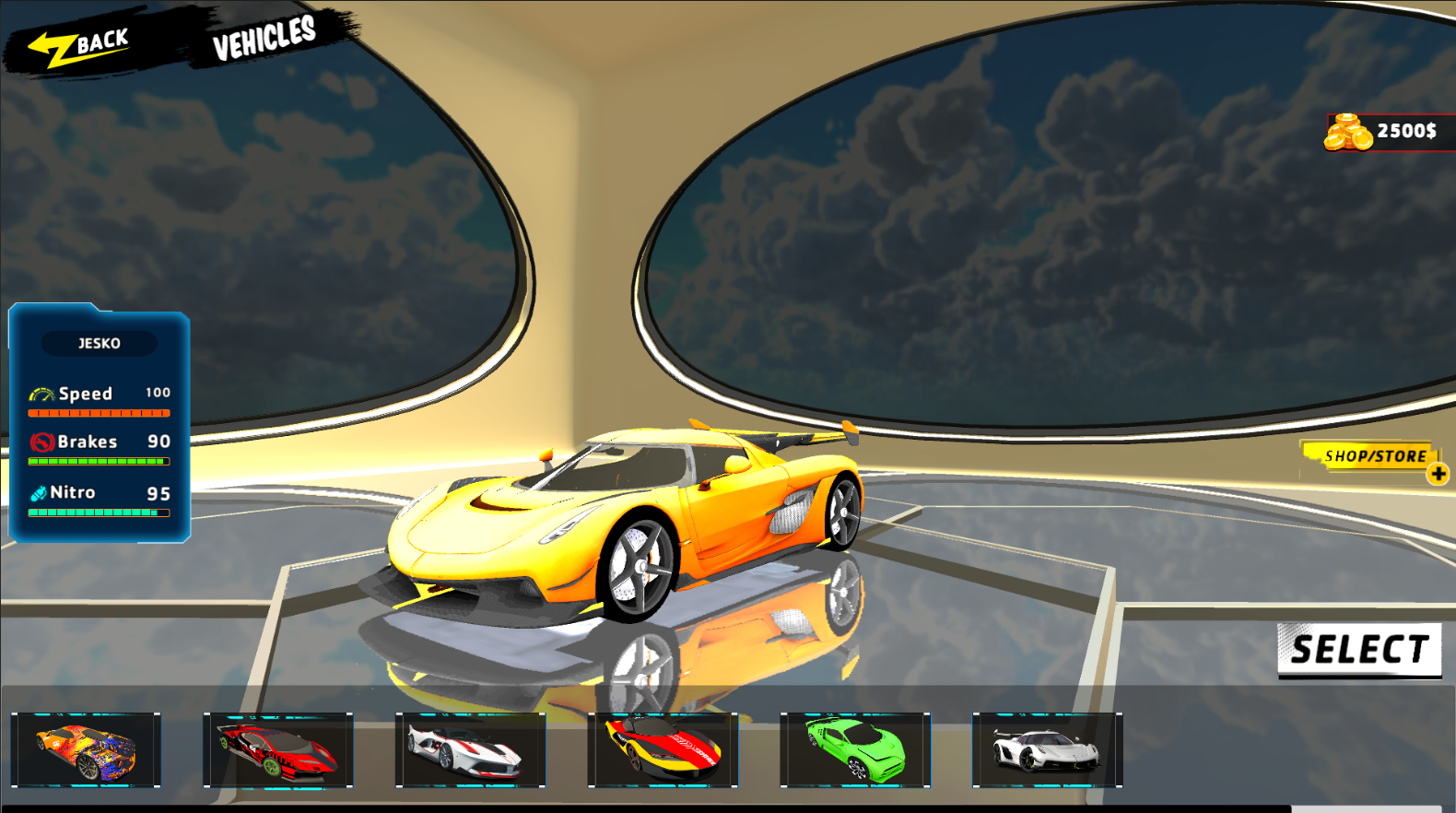

Stunt Car
2026
Game Development
Stunt Car is a Unity C# 3D racing and stunt game with multiple vehicles, nitro boost mechanics, and an advanced trick detection system for aerial maneuvers. Developed by Abdul Fahad Shahbaz, a Unity game developer in Lahore, Pakistan, this project showcases vehicle physics programming, progressive level design, and in-game shop systems for a complete hyper-casual racing experience.
Project Overview
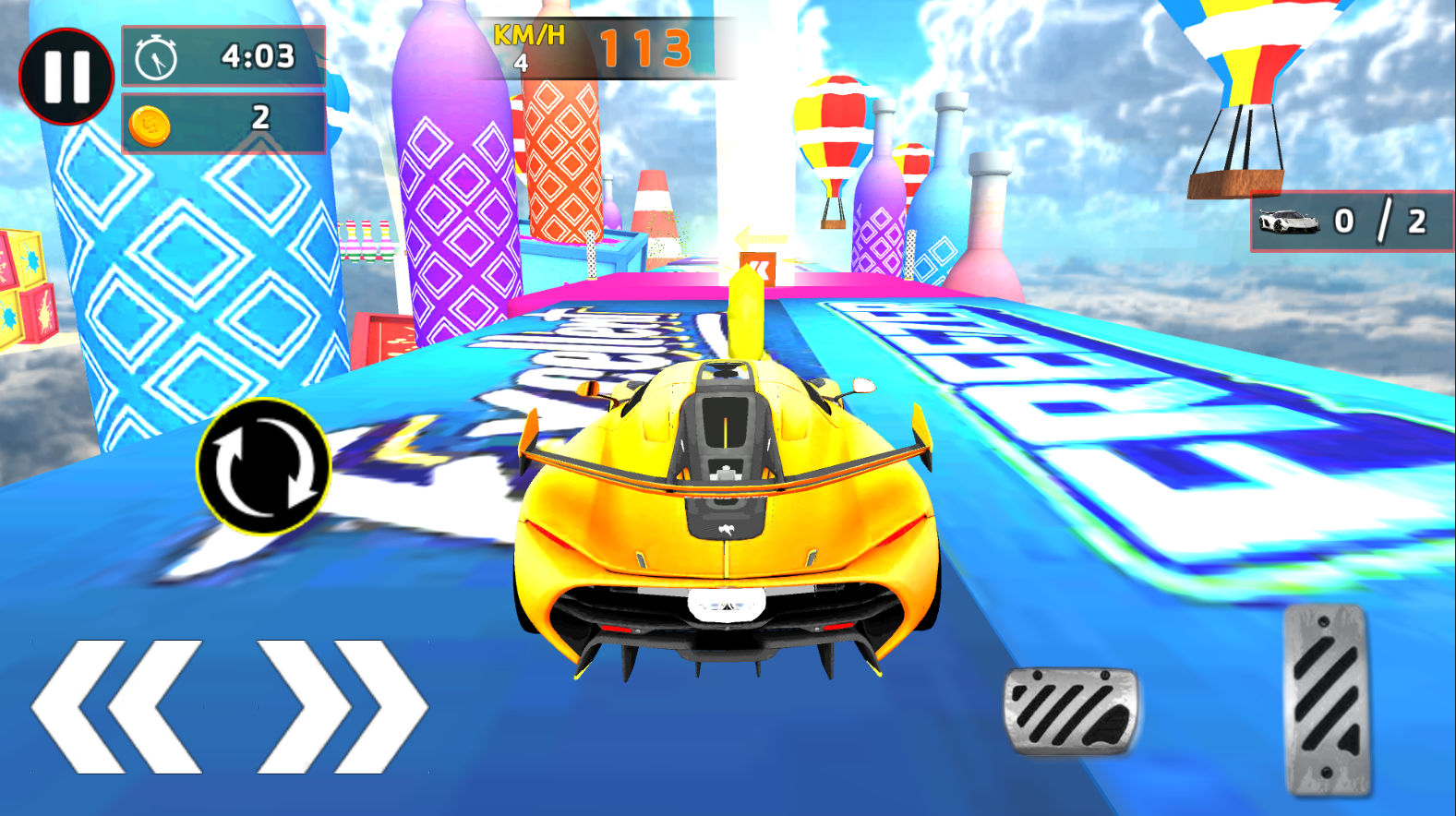
Stunt Car is a 3D racing and stunt game developed in Unity using C#. The game features a diverse fleet of vehicles that players can choose from, each with unique performance characteristics including speed, brakes, nitro power, and jump ability. Players navigate through multiple levels filled with ramps, obstacles, and stunts, competing to achieve high scores and complete challenging courses.
The game combines fast-paced racing mechanics with acrobatic stunt opportunities, allowing players to perform aerial tricks, land jumps, and execute complex maneuvers. Progressive level design gradually introduces new challenges and unlockable cars, keeping gameplay fresh and engaging throughout the experience.
Key Features
- Multiple Playable Cars — Choose from different vehicles, each with unique speed, handling, brakes, and nitro properties.
- Vehicle Customization — Upgrade car performance metrics including speed, acceleration, and jump power.
- Multiple Levels — Diverse courses with varying difficulty, layouts, and environmental themes.
- Endless Stunt Opportunities — Perform tricks, execute jumps, and land aerial maneuvers for bonus points.
- Obstacle Navigation — Avoid hazards and navigate complex terrain while maintaining control.
- Nitro/Boost System — Activate turbo for speed bursts to overcome challenging sections.
- Dynamic Camera System — Third-person chase camera that follows the vehicle during intense action.
- Scoring System — Earn points for speed, tricks, time bonuses, and obstacle avoidance.
- Progressive Difficulty — Levels gradually increase in complexity and challenge.
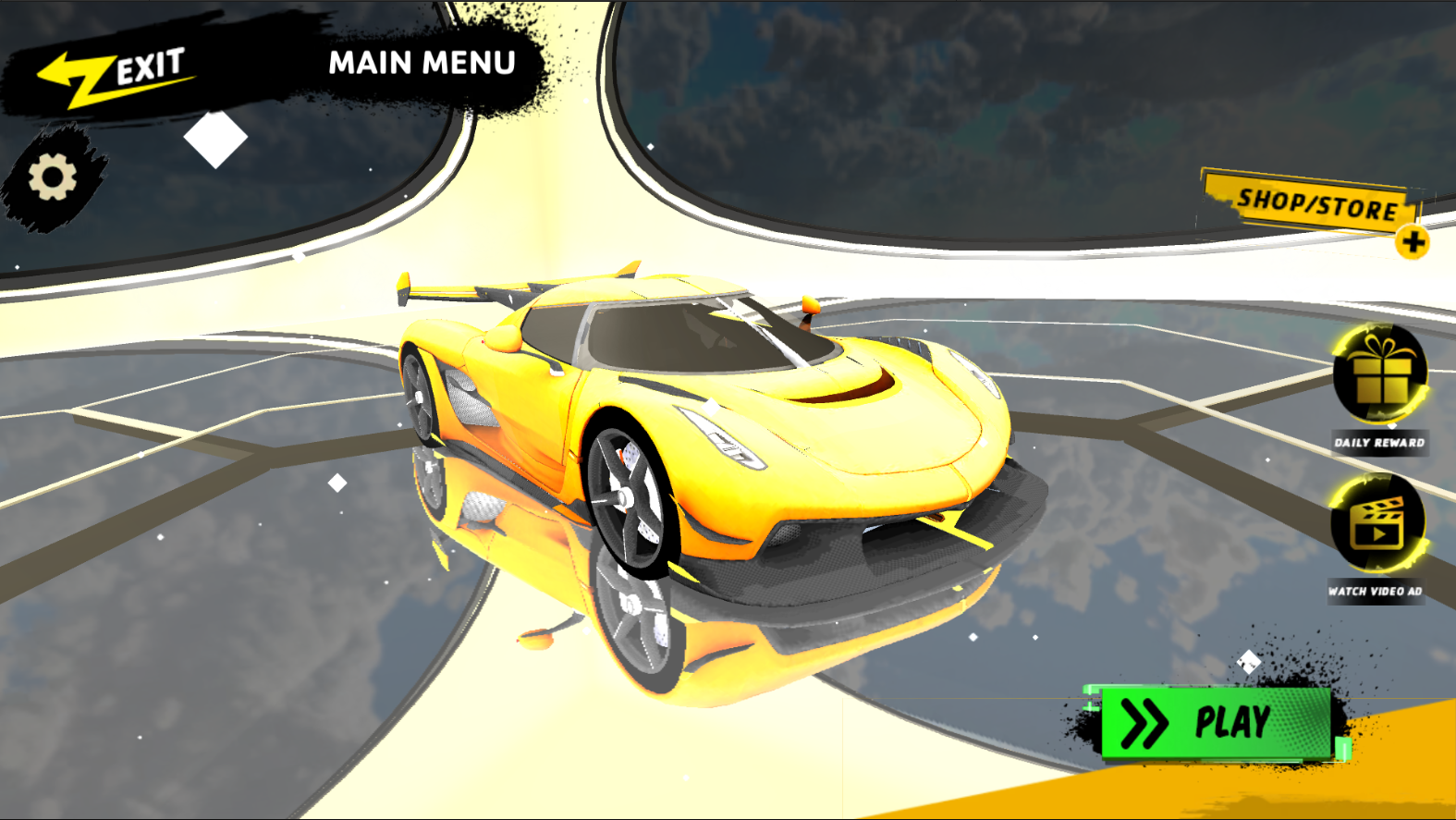
- Shop/Store System — Purchase and unlock new cars and upgrades using in-game currency.
- Particle Effects — Visual feedback for impacts, drifts, and stunt landings.
Technical Implementation
Core Systems Developed
- Vehicle Controller — Handles acceleration, braking, steering, and nitro boost mechanics.
- Physics Engine Integration — Manages collision, gravity, and realistic vehicle physics.
- Stunt Detection System — Recognizes aerial tricks, jumps, and landing quality for scoring.
- Car Selection and Customization — Manages car stats, upgrades, and visual customization.
- Level Manager — Controls level loading, progression, and checkpoints.
- Scoring System — Calculates points based on speed, tricks, and level completion.
- Shop System — Handles currency, car purchases, and upgrade transactions.
- Camera System — Provides dynamic third-person perspective during gameplay.
- UI Manager — Displays HUD with speed, nitro, score, and level progress.
- Audio Manager — Engine sounds, music, stunt effects, and ambient audio.
Technologies Used
- Unity
- C#
- 3D Physics Engine (Rigidbody Physics)
- Particle System
- 3D Modeling and Animation
- Visual Studio
Gameplay Mechanics
Vehicle Physics
Each car is programmed with distinct acceleration, top speed, braking power, and handling characteristics. Players must learn the strengths and weaknesses of each vehicle to optimize their performance on different tracks.
Stunt System
Players earn bonus points by performing tricks mid-air, executing perfect landings, and maintaining control through challenging terrain. A stunt detection system calculates rotation, altitude, and landing smoothness to award points.
Nitro Boost Mechanics
The nitro system provides strategic speed bursts. Players must manage nitro reserves, deciding when to use boosts for maximum advantage across jumps and straightaways.
Development Challenges and Solutions
Balancing Vehicle Physics
Fine-tuning suspension, acceleration curves, and handling for each car required extensive playtesting to ensure fair and fun gameplay across all vehicles.
Implementing Robust Stunt Detection
Creating a reliable system to detect and score tricks required monitoring vehicle rotation, velocity, and landing impact to correctly identify different stunt types.
Level Design Complexity
Designing multiple challenging levels with progressive difficulty while remaining fun and fair required careful placement of ramps, obstacles, and jumps.
Skills Demonstrated
- 3D Vehicle Physics Programming
- Racing Game Development
- Stunt and Trick System Implementation
- Object-Oriented Programming (OOP)
- Level Design and Progression
- Shop and Economy Systems
- Dynamic Camera Implementation
- Performance Optimization
- Audio Integration
- Problem Solving and Debugging
Learning Outcomes
This project significantly enhanced my understanding of vehicle physics, racing game mechanics, and stunt systems. It demonstrated how to create engaging driving experiences through careful vehicle balancing, responsive controls, and rewarding gameplay loops. The project also reinforced the importance of progressive difficulty, variety in level design, and player choice in vehicle selection for maintaining long-term engagement.